Your First Aid Guide: Safe Steps for Loved Ones
First aid is the immediate, temporary care given to a person who has been hurt,
injured, or suddenly taken ill. It serves as the bridge between the moment an
accident or medical incident happens and receiving professional medical help
It focuses on managing an emergency rather than providing a cure, and
includes:
- Preserve life: Carry out life-saving actions (like CPR)
- Prevent deterioration: Stop the injury from getting worse, like applying
pressure to bleeding
- Promote recovery: Provide comfort and basic treatment (like cleaning a
wound) to help the healing process start sooner
- Brain Survival: The brain cells begin to die within 4-6 minutes without
blood /oxygen
- Pain Relief: like positioning a patient comfortably or applying a cold
pack
- Prevents Chaos: A trained person can take charge of the scene, keep
others calm, and provide clear information to emergency dispatchers
Common Techniques & Actions
Helps stabilise a person while waiting for medical help
- CPR (Cardiopulmonary Resuscitation): Keeping blood and oxygen
flowing when the heart stops
- Choking Manoeuvres:Using back blows or abdominal thrusts (Heimlich)
to clear an airway
- Wound Care: Stopping bleeding with direct pressure and bandaging cuts
to prevent infection
- Burns Treatment: Cooling burns and protecting from infections
- Day-to-day minor incidents, like bee stings, dog bites, snake bites, bruises
and similar situations
Why is First Aid Necessary?
First Aid is critical because, in a medical emergency, time is the biggest enemy.
- Brain Survival: The brain begins to die within 4-6 minutes without
oxygen. A first aider can provide oxygen through rescue breaths before
an ambulance arrives
- Reducing Recovery Time: Treating a minor injury correctly prevents
long-term damage or severe infections
- Pain Relief: Simple actions, like positioning a patient comfortably or
applying a cold pack, significantly reduce physical and emotional distress
- Prevents Chaos: A trained person can take charge of the scene, keep
others calm, and provide clear information to emergency dispatchers to
help them prepare appropriately.
Anyone with some basic knowledge can provide first aid. This could be
anywhere, at home, work, or outside, such as a roadside location.
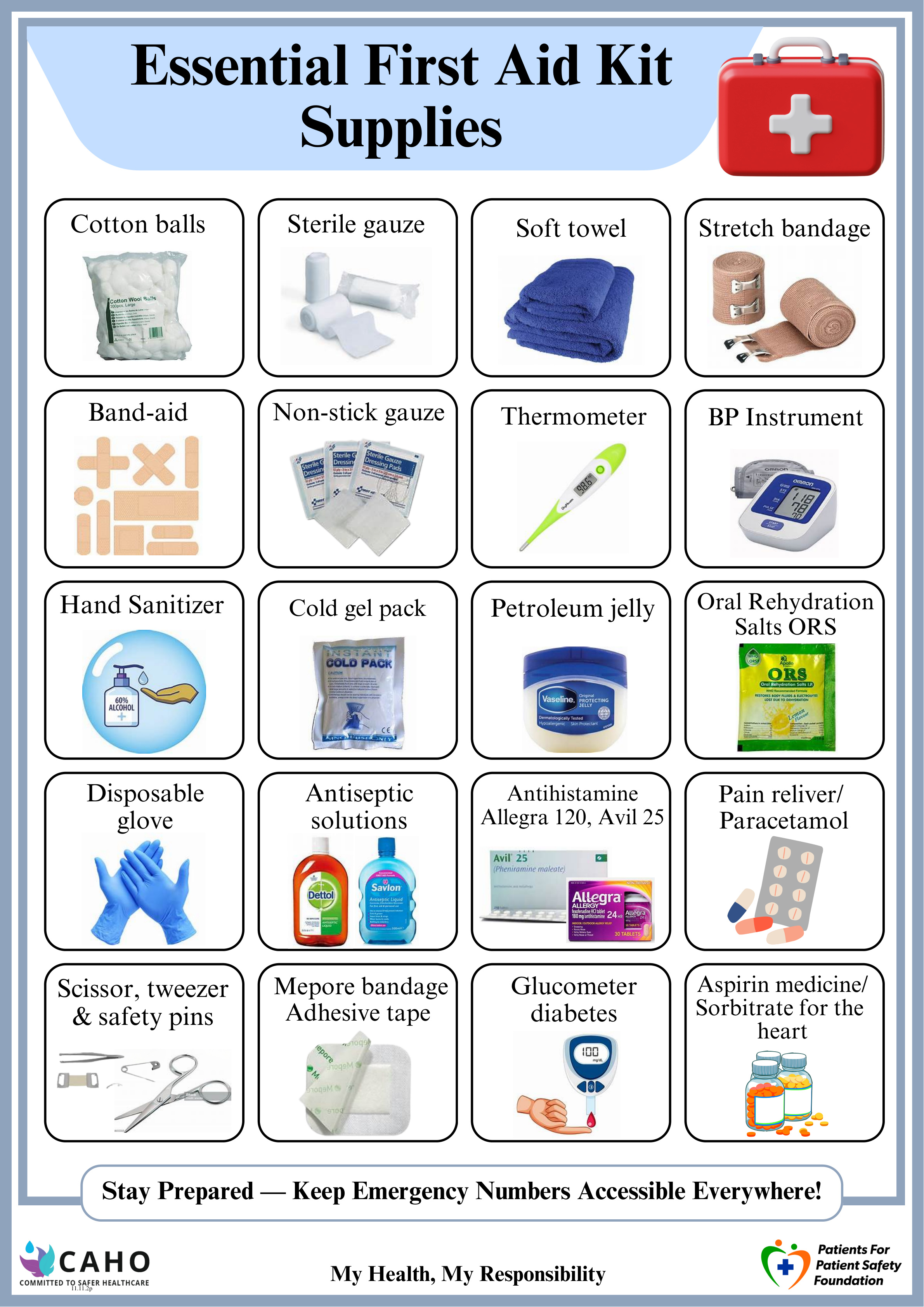
Often, you just need your hands, but having a well-stocked first aid kit is
essential for handling those minor incidents. It is best to keep one in your home,
workplace and a smaller version in your car or on travels.